
Euchre 3D Card Game Online
A-Star Software LLCCard
4.69.79K Reviews
- Version
- Varies With Device
- Installs
- 1.00M
- Age Rating
- Everyone
Screenshots
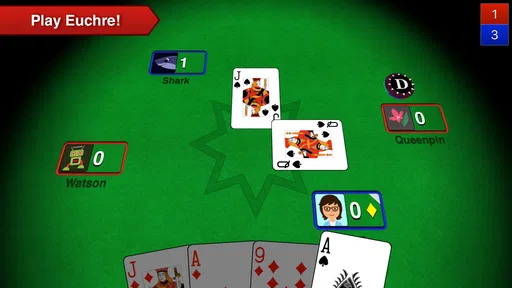
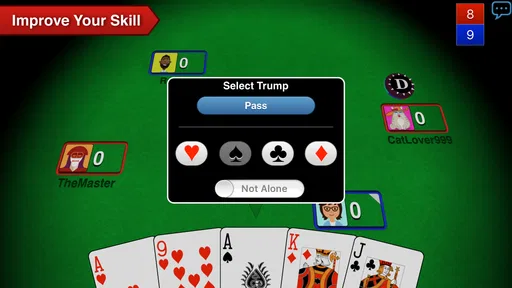
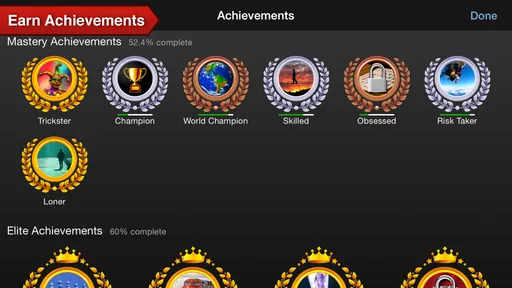
Our Review of Euchre 3D Card Game Online
 Analysis by Appyee
I spent time with Euchre 3D as a straightforward way to play the classic trick-taking card game on a phone. It is free to start, aimed at everyone, and comes from A-Star Software LLC. What stood out to me is how quickly it gets to the part that matters: choosing a card, watching the trick develop, and deciding whether the next hand is worth taking a risk on. It feels designed for people who already know Euchre, but it also gives curious newcomers a manageable place to learn.
The game has been available since June 6, 2014, and its long presence is easy to understand. Euchre is naturally suited to short sessions, and a digital table removes the need to find three other people, shuffle cards, or keep score manually. The app has reached over a million installs, with a 4.6 average from around sixty-four thousand ratings and roughly ten thousand written reviews. Those figures suggest a well-established audience, although popularity alone does not make every match equally enjoyable.
How Euchre 3D feels in everyday play
I find the everyday appeal of Euchre 3D lies in how little planning it demands: I can choose a quick AI hand or meet friends online, then focus on the cards rather than organizing a physical table. That convenience also makes it easy to notice which decisions keep a session enjoyable and which ones make me want to pause. The next section looks at how the game’s feedback shapes those choices.
Fast starts and a rhythm that suits short sessions
My favorite quality here is the compact pace. A hand begins with very little ceremony, so I can open the game during a break, play a few tricks, and stop without feeling committed to a long campaign. That makes it a better fit for casual card players than many larger mobile games that surround a simple activity with menus, unlocks, and distracting extras.
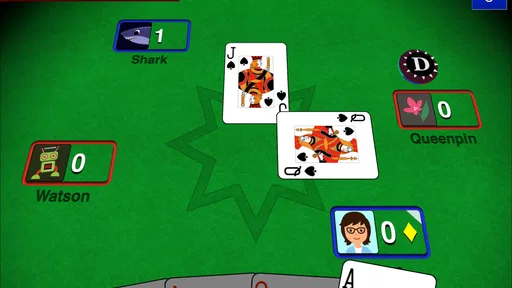
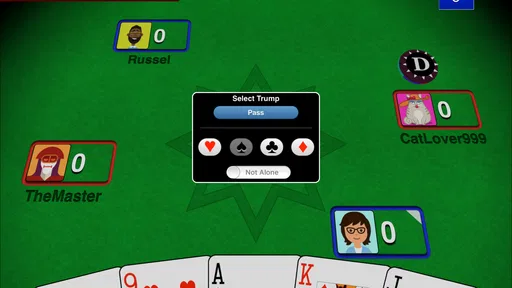
The card format also helps the game feel responsive in a practical sense. There are only a few meaningful choices at any moment, and the table makes the current trick easy to follow. When I am deciding whether to call trump or conserve a strong card, I am thinking about the hand rather than trying to understand a complicated interface. The real strength is its low-friction loop: deal, decide, play, and immediately learn from the result.
That speed should not be confused with shallow strategy. Euchre rewards awareness of the cards already played, the likely distribution of suits, and the relationship between my hand and my partner’s decisions. A quick match can still demand concentration. I found that the app works especially well when I want a focused mental break rather than passive entertainment.
Online matches and AI partners serve different moods
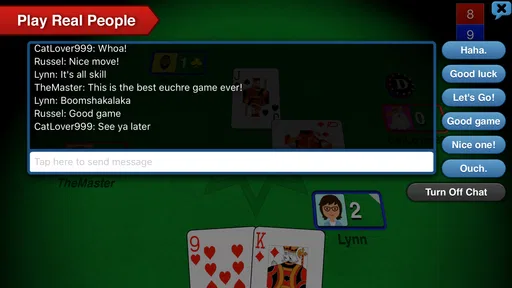
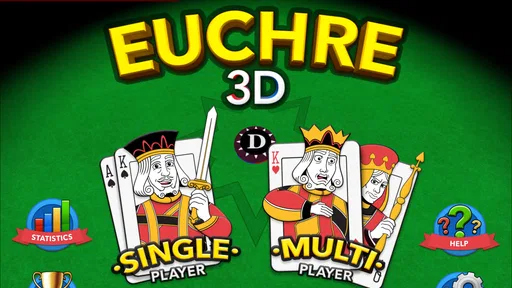
The central choice is whether to play online with friends or rely on the AI bots. Playing with friends gives the game its social character, particularly when everyone already understands the rules and wants a few relaxed hands together. It is a convenient substitute for arranging a physical table, though the quality of the experience naturally depends on the people available and the connection between them.
The bots are more useful than a simple practice decoration. I turn to them when I want a predictable session, when nobody else is available, or when I am still rebuilding confidence with the rules. They let me focus on card management without waiting for another player. For a new player, this is a sensible first stop: learn the flow against AI, then move online once calling, following suit, and counting tricks feel natural.
There is a trade-off. A human table can produce surprising decisions, unusual calls, and the social tension that makes Euchre memorable. AI play is more convenient, but it cannot fully reproduce that atmosphere. Anyone looking for lively conversation or a strong competitive community may prefer a dedicated multiplayer service with more social tools. This app is better when I value immediate play over a large surrounding community.
What happens when the table gets busy
The most demanding moments are not visually heavy scenes; they are busy game situations. A close hand can require rapid attention to the lead suit, the trump suit, the cards already exposed, and the likely plan of each side. The app’s card-game format keeps the visual workload modest, but the mental workload rises sharply when a round is close and every trick matters.
That distinction matters for device expectations. I would not choose this game for impressive graphics or hardware testing. Its appeal is that a card table can remain readable and useful without asking the phone to render a large world. On a modern Android or iOS device, the basic format should feel naturally suited to short, repeated sessions. On an older phone, the game is still conceptually a good match, although general device age, operating-system behavior, and the quality of an online connection can affect the experience.
During longer play, the main source of fatigue is more likely to be attention than resources. I can play several hands without the game feeling like a demanding application, but I do notice that online sessions require more patience when another player takes time to act. That is not a flaw in the card interface itself; it is an unavoidable part of multiplayer play. If I need a guaranteed quick finish, I choose the bots instead.
Stability depends on whether I play locally or online
For reliability, I separate the two modes in my mind. AI games are the safer choice when I want control over the session. There is no need to coordinate with friends, and the match follows my pace. That makes the app useful on a commute, during a waiting period, or at home when I want a few hands without arranging anything beforehand.
Online play has a higher ceiling but also more points of friction. A weak connection, an unavailable friend, or a slow response from another player can interrupt the clean rhythm that makes the game appealing. I would not treat an online card game as a guaranteed offline replacement. Instead, I see the bots as the recovery option: if the social table is inconvenient, I can still play the same core game rather than abandoning the app.
This recovery path is one of the more practical advantages. Many multiplayer games feel empty when nobody is available, but Euchre 3D remains usable because the AI mode preserves the essential card-play loop. That does not make every bot decision perfect or every session equally engaging, yet it gives the app a dependable fallback. I can move from social play to solo play without learning a different game.
How to use it when the phone is older or storage is tight
The game’s card-focused design makes it a reasonable candidate for people who do not want a large, resource-hungry mobile title. I would still keep normal expectations: a phone with an outdated operating system, limited free space, or an unstable network can create problems that are not caused by the rules or the card table. The important point is that this is not a graphics-heavy game whose value depends on a powerful processor.
For an older device, I would start with AI matches and see whether the table remains comfortable to read and operate. That approach also avoids using a mobile connection until I know the game suits me. If online play is the main reason for installing it, I would test a short match before planning a longer session with friends. This is a simple but useful workflow because it separates device comfort from connection reliability.
Resource demands are also connected to how I play. A short AI session is a modest use case, while repeated online matches may keep the phone active for longer. I would not install it expecting a full tabletop collection or a broad arcade package; its focused design is precisely why it can fit into small gaps in the day. If I want a game that occupies a lot of screen time with visual variety, this will feel limited rather than efficient.
Learning the game without wasting good hands
Newcomers should resist the temptation to call trump simply because a hand contains one attractive card. The better habit is to consider how many cards can realistically win tricks and whether the partner may support the decision. I found that the app is most useful as a learning tool when I pause after each hand and ask why a call worked or failed, instead of treating the result as random luck.
A helpful practice routine is to use AI play for focused experiments. In one session, I might pay attention only to remembering which trump cards have appeared. In another, I might watch how often I am forced to follow a suit after spending a strong card too early. This turns short matches into deliberate practice and gives the bots a role beyond filling an empty table.
Players who already know Euchre can use the same approach to sharpen discipline. The digital format makes it easy to play another hand immediately, but that convenience can encourage careless decisions. I get more value when I treat each deal as a small puzzle and avoid clicking through simply because the next move looks obvious. The app is quick enough for casual play, yet it rewards a slower, more thoughtful style when I want improvement.
Where the free model fits into the decision
The game is free to download and play, which lowers the barrier for trying both AI and online sessions. There are in-app purchases ranging from under a dollar to about twenty dollars per item. I would approach those purchases carefully and decide first whether the basic card experience already gives me enough value. For a simple Euchre game, the free starting point is important because it lets me judge the interface and opponents before spending anything.
This pricing structure will suit some players and bother others. Someone who wants a focused card game at no initial cost can explore it comfortably. Someone who dislikes optional spending in free games may prefer a paid, one-time card app or a physical deck with a score sheet. The right comparison is not only price; it is also whether online play and AI convenience are worth having in one place.
The Everyone content rating makes the game approachable for a broad audience. That does not mean every table will suit every person, since online interaction can vary, but the underlying card activity is easy to share across age groups. I can imagine it working for a family member learning the game, a longtime Euchre player wanting a quick digital table, or friends who cannot meet in person.
When another card app would be a better choice
I would skip this game if Euchre is not the card game I want to play. Its focused identity is an advantage for enthusiasts, but it does not replace a broad card collection with solitaire, hearts, spades, or other formats. Installing it in the hope of discovering many unrelated games would lead to disappointment.
I would also look elsewhere if my priority is a highly social environment with extensive messaging, tournaments, clubs, or a large competitive ladder. The online multiplayer option makes shared play possible, but the appeal here is the match itself, not a giant social platform surrounding it. A specialist service built around community competition may be more appropriate for players who want rankings and constant interaction.
Likewise, people who need guaranteed offline access should make AI play their main expectation rather than assuming every online function will be available anywhere. The bots make the app more flexible, but they do not turn multiplayer into a local gathering. For a physical table, a deck of cards is still better at creating conversation and reading the reactions of real partners across from me.
My practical routine after spending time with it
When I open the game casually, I begin with an AI hand to get into the rhythm. If friends are available and the connection is behaving well, I switch to online play. I keep the first few hands relaxed rather than trying to prove anything, because Euchre becomes more enjoyable when I pay attention to patterns instead of rushing toward a result.
For someone teaching a new player, I would explain the objective away from the busiest part of the match, then let the learner play several AI hands. The useful teaching moments come after a trick: why a card had to follow suit, why a trump card changed the outcome, and why a conservative call can be better than a hopeful one. The app provides the table, while the player supplies the explanation.
For someone returning to Euchre after a long break, I would use it as a refresher rather than jumping immediately into a serious online game. A few quiet hands reveal whether the rules and strategy still feel familiar. This is also where the game’s speed helps: I can test myself without scheduling an evening or finding a complete group.
My performance verdict
My overall impression is that Euchre 3D is efficient because it stays close to the card game. It does not need elaborate presentation to be useful, and its AI option gives the app a reliable second life when online play is inconvenient. The format is easy to pick up, light enough for short sessions, and strategic enough to keep experienced players thinking about their choices.
Its limitations are just as clear. The experience is narrow, online play cannot remove the uncertainties of real-time multiplayer, and players seeking a broad collection or a deep social ecosystem may outgrow it. The in-app purchase range also means I would examine the free experience before buying anything. None of those points undermines the core game, but they help set the right expectations.
I recommend it to anyone who specifically wants a digital Euchre table, especially players who value quick AI matches and the option to play with friends. I would be less likely to recommend it to someone searching for visual spectacle, many card variants, or a full community platform. For its intended purpose, though, the balance is convincing: a focused, free card game that remains useful even when the perfect group is not available.
After using it, I see the best role for this game as a dependable companion rather than an all-purpose mobile pastime. Keep it ready for a short break, a practice session, or an online hand with friends. If that is exactly the kind of card experience you want, A-Star Software LLC has made a practical choice by keeping the action direct and giving the player more than one way to reach the table.
Verdict
Strengths of Euchre 3D Card Game Online
- Smooth online matchmaking with quick access to live Euchre games.
- Clear card animations make tricks and trump choices easy to follow.
- Helpful tutorials let new players learn the rules before competing.
- Multiple game options provide variety beyond standard online matches.
- Runs well on many devices without requiring high-end hardware.
Limitations of Euchre 3D Card Game Online
- Online play depends heavily on a stable internet connection.
- Some opponents may leave matches early or play unpredictably.
- The interface can feel dated compared with newer card-game apps.
- Advanced players may find the available strategy options limited.
- Ads or in-app purchases may interrupt the free gameplay experience.
Similar Picks in This Category
View All
Solitaire - Classic Card Games
MobilityWare4.6

UNO!™
Mattel163 Limited4.3

Spider Solitaire: Card Games
MobilityWare4.6

Solitaire.com - Classic Cards
Tripledot Studios Limited4.7

Plants vs. Zombies™ Heroes
ELECTRONIC ARTS4.1

Hearthstone
Blizzard Entertainment, Inc.4.1
Frequently Asked Questions
What is Euchre 3D Card Game Online?
Euchre 3D Card Game Online is a digital version of the classic trick-taking card game for mobile devices. It allows you to play Euchre against computer-controlled opponents or compete with other players online. The app generally includes realistic card tables, animated dealing, score tracking, and customizable gameplay options, making it suitable for both casual players and people who already know the traditional rules.
Can beginners learn how to play Euchre in the app?
Yes, the game is accessible to beginners, although understanding Euchre’s basic rules will make the first matches easier. New players can use practice games against artificial intelligence to become familiar with bidding, choosing trump, bowers, tricks, and scoring. The interface usually displays the current turn and available actions clearly, but learning common strategies may still require several rounds of hands-on practice.
Does Euchre 3D Card Game Online require an internet connection?
An internet connection is typically needed for online multiplayer matches, account-related features, leaderboards, and other connected services. Depending on the version and device, you may also be able to play selected solo or practice games offline against the computer. If you plan to play while traveling, it is best to test the offline mode beforehand because some features may remain unavailable without a stable connection.
Can I play with friends or other real players online?
The main appeal of Euchre 3D Card Game Online is its multiplayer functionality. Players can usually join online tables and compete against real opponents, while some versions may offer private rooms, invitations, matchmaking, or social features. Availability can depend on the app version, region, and active player population. Before downloading, check whether the current release supports the specific friend-play options you want.
Is Euchre 3D Card Game Online free to download and safe to use?
The app may be available as a free download, but free versions can include advertising, optional purchases, or restrictions on certain features. Review the store listing for current pricing and in-app purchase details before installing. For safety, download it only from the official Google Play Store or Apple App Store, check the developer name and requested permissions, and keep the application updated through the official store.
Play our best games!


